Explore Our Energy and Infrastructure Expertise
Key Takeaways
- Zambia’s dependence on hydropower left its electricity system exposed during drought conditions.
- The resulting shortage affected households and major economic sectors, including agriculture and mining, with periods of up to 21 hours of power outages or “load-shedding”.
- Open access enabled private entities such as Africa GreenCo to buy and supply energy, creating another route for responding to electricity shortages.
- New generation is also part of the resilience equation. The Chisamba solar project brought 100 MW onto the grid in its first phase.
- Zambia’s longer-term direction points towards a generation mix incorporating hydro, solar and wind.
From energy crisis to resilience: what Zambia can teach Africa about powering growth
Zambia’s response to its 2024 power shortage shows why Africa’s energy transition cannot be reduced to only generating more electricity. Resilience also depends on diversified generation, market innovation, private-sector participation and collaboration between institutions that can adapt quickly when conditions change. The experience points to a broader lesson for Africa: resilient energy systems will require diverse sources of generation, effective public-private collaboration and financing structures capable of moving projects from ambition to delivery.
A new path to energy security
Energy security is not simply an infrastructure issue. It shapes whether businesses can operate, industries can produce and communities can participate in economic growth.
Zambia experienced that relationship directly in 2024. An ongoing drought resulted in a severe electricity shortage. More than 85% of Zambia’s power generation came from hydropower, and the energy crisis resulted in load-shedding lasting as long as 21 hours in a day.
The impact extended across the economy. Households, agriculture, mining and supporting industries were all affected. For Zambia, the challenge was bigger than restoring electricity. It was about protecting the economic activity and everyday livelihoods that depend on reliable power.
When urgency creates room for new thinking
Crises expose vulnerabilities, but they can also accelerate innovation. One of the developments was an open access model for Zambia. Africa GreenCo explains it simply: the model allows private entities such as Africa GreenCo to buy and supply energy.
The speed described by participants is striking. Rentia van Tonder, Global Head of Power & Renewables, Standard Bank, says the Africa GreenCo team presented the situation as an emergency with “six weeks to deliver”. Through the open access model, the country was able to import emergy supplies of electricity for the short-term.
That experience offers a broader lesson. Energy resilience requires infrastructure, but it also requires institutions and market mechanisms capable of responding when established models come under strain.
Resilience means increasing generation as well
An emergency response can address an immediate shortage. Long-term resilience requires something more fundamental: sufficient, diversified generation capacity.
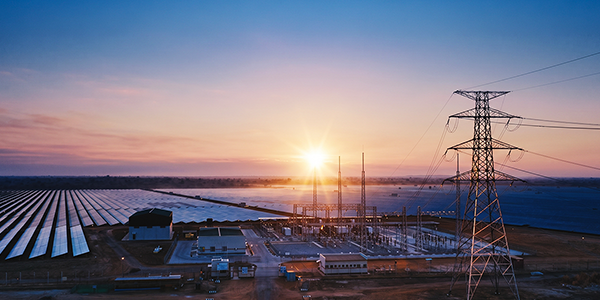
“The vision behind the Chisamba solar project was to transform Zambia’s energy system to a more climate resilient electrical system,” explained Boyd Kanchela from KNBC.. David Chanda, Stanbic Bank, Zambia states that the project brought 100 MW of power onto the grid, while Veronica Tembo, First Quantum Minerals (FQM), says FQM provided the offtake for the first-phase 100 MW solar project.
Energy investment therefore has both an economic and human dimension. Megawatts matter because of what reliable electricity allows people and businesses to do.
Diversification is becoming central to energy resilience
One of the clearest lessons from Zambia’s experience is the importance of diversification. Helen Lubamba, CIB CEO of Stanbic Bank Zambia says Zambia’s integrated resource plan envisages a more diversified generation mix incorporating hydro, solar and wind.
Where an electricity system depends heavily on one generation source, disruption to that source can spread through the wider economy. A more varied energy mix can form part of a broader resilience strategy.
Financing Africa’s energy future requires local understanding
Energy infrastructure depends not only on viable projects, but also on institutions willing and able to understand local markets.
Sherrill Byrne, Head Project Finance, Energy & Infrastructure, Standard Bank, captures the challenge directly: “It’s never easy doing project finance in Africa. We go and understand the market and we go canvass for opportunities, and we figure out how we can get more done for the betterment of the country.”
For Standard Bank Corporate and Investment Banking (CIB), that local understanding sits alongside experience in bringing participants together and supporting the financing of African infrastructure. David Chanda says Stanbic Bank is positioned to support projects of this nature because of its experience in bringing projects through to completion.
African energy markets have different regulatory frameworks, generation mixes, resources and commercial realities. Solutions need to start with an understanding of each market and bring together the right participants around its specific needs.
From a Zambian response to an African opportunity
Zambia’s story began with a crisis, but its longer-term significance could lie in what happens next. Africa’s energy challenge will not have a single answer.
Zambia’s experience suggests an important starting point: collaboration across sectors, development of new generation and financing informed by local market realities.
When energy resilience improves, the opportunity extends beyond keeping the lights on. It can help create the conditions in which industries operate, businesses recover, communities participate and economies grow.
Voices of our Impact videos

A Win-Win Energy Solution
In late 2024, Zambia’s energy crisis reached a breaking point. Africa GreenCo, Standard and Stanbic Bank teams, the national utility and government stakeholders came together to spark one of Africa’s most innovative energy financing solutions.

Powering Zambia Through Partnership
What does it take to help power a nation through an energy crisis? Rentia van Tonder of Standard Bank discusses how collaboration and foresight were key to finding solutions to the 2024 energy crisis. Discover how the team came together to deliver a pioneering solution.

What Made the Zambian Chisamba Solar Deal So Unique?
The Chisamba solar deal stands out not just for the renewable energy it generated, but for the innovative partnership behind it. Sherrill Bryne of Standard Bank explains how public and private sector collaboration helped unlock a pioneering energy solution for Zambia.

Balancing Energy Security, Affordability and Sustainability
Addressing Zambia's energy crisis required more than securing additional power. Helen Lubamba and Mwindwa Siakalima of Stanbic Bank Zambia discuss how the team worked to deliver an energy solution that was reliable, affordable and sustainable for the long term.

Powering Change at Scale
The Chisamba solar plant introduced an innovative energy solution for Zambia. David Chanda of Standard Bank and Boyd Kanchela of KNBE discuss how the project helped expand energy supply, support communities and deliver meaningful impact across the country.

Powering Communities Beyond the Grid
Chief Chamuka, Chief of the Lenje people of Chisamba, shares how the Chisamba solar plant has helped create jobs, support education and improve access to healthcare. Discover the lasting social impact of a project that's helping transform lives and communities
Frequently asked questions
How did Zambia respond to the 2024 electricity shortage?
Zambia used an open access model that allowed private entities such as Africa GreenCo to buy and supply electricity. This enabled the country to import emergency electricity supplies in the short term, with participants describing a six-week timeframe for delivery.
How does Zambia plan to diversify its electricity generation mix?
Zambia’s integrated resource plan envisages a generation mix incorporating hydro, solar and wind. Diversifying generation can address the vulnerability associated with heavy dependence on a single source of electricity generation.
How is the Chisamba solar project supporting Zambia’s energy resilience?
The first phase of the Chisamba solar project brought 100 MW of power onto Zambia’s grid, with First Quantum Minerals providing the offtake. The project was developed with the aim of contributing to a more climate-resilient electricity system.
What is important when financing energy infrastructure in African markets?
Energy project financing requires an understanding of local market conditions, collaboration among relevant participants and experience in bringing projects through to completion. African energy markets have different regulatory frameworks, generation mixes, resources and commercial realities, requiring solutions that respond to the specific needs of each market.
Why was Zambia vulnerable to the 2024 energy crisis?
More than 85% of Zambia’s power generation came from hydropower, leaving the electricity system exposed to drought conditions. In 2024, an ongoing drought contributed to a severe electricity shortage, with load-shedding reaching up to 21 hours a day and affecting households, agriculture, mining and supporting industries.
Explore more insights
Energy
7 Aug 2026
Powering Industrial Growth through Africa’s Resources
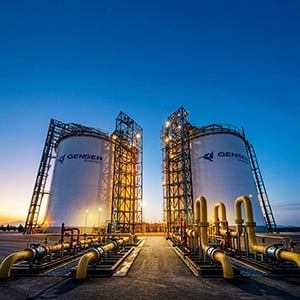
Genser Energy's transition is supporting industrial growth through increased use of natural gas and investment in energy infrastructure. We explore how Genser Energy's natural gas pipeline network delivers reliable power to key industries, including mining, while reducing reliance on imported fuels. We also highlight Standard Bank's support in financing critical infrastructure, and how domestic energy resources, regional energy exports and skills development are driving economic growth and a cleaner energy future across Africa.

Sectors
31 Jul 2026
Long Walk to Power Resilience – Unlocking LNG into South Africa
Gas means different things in different geographies. In the United States of America (USA), “Gas” means natural gas or gasoline. In South Africa (SA), gas normally means Liquefied Petroleum Gas or more commonly, cylinders seen at restaurants.

Sectors
24 Jun 2026
Powering Africa’s Just Energy Transition: From Ambition to Bankable Delivery
The formula for developing and financing power projects in Africa has been much the same for many years. A utility procured new generation capacity, a developer built the project, a long-term power purchase agreement created revenue certainty, and some form of sovereign support helped mitigate risk. For this formula to work, reliability, cost and bankability were essential, but they were largely addressed within a conventional project structure.

Sectors
23 May 2026
Africa at the forefront: the urgent need to diversify energy supply
As we approach the second half of the year, it is important to reflect on the busy first half. After a hectic 2025, most observers would have expected some form of respite. Unfortunately, respite will not likely be a word associated with the half of the year 2026.

Sectors
11 Jun 2026
The rules of power are changing in Africa
The formula for developing and financing power projects in Africa has been much the same for many years. A utility procured new generation capacity, a developer built the project, a long-term power purchase agreement created revenue certainty, and some form of sovereign support helped mitigate risk. For this formula to work, reliability, cost and bankability were essential, but they were largely addressed within a conventional project structure.


Sustainability
17 Oct 2025
West Africa’s energy transition
With West Africa positioned as one of the world’s fastest-growing regions, energy transition financing has become critical to unlocking the continent’s industrial potential. As countries like Ghana and Nigeria leverage their substantial gas reserves, financial institutions like Standard Bank are playing a pivotal role in supporting natural gas infrastructure development that bridges the gap between current energy needs and future renewable goals.

Sustainability
17 Oct 2025
Powering Africa's industrial growth
Energy infrastructure stands as the cornerstone of Africa's industrial transformation, with Tanzania emerging as a compelling example of how strategic energy investments in Africa can unlock manufacturing potential and drive regional economic growth.